
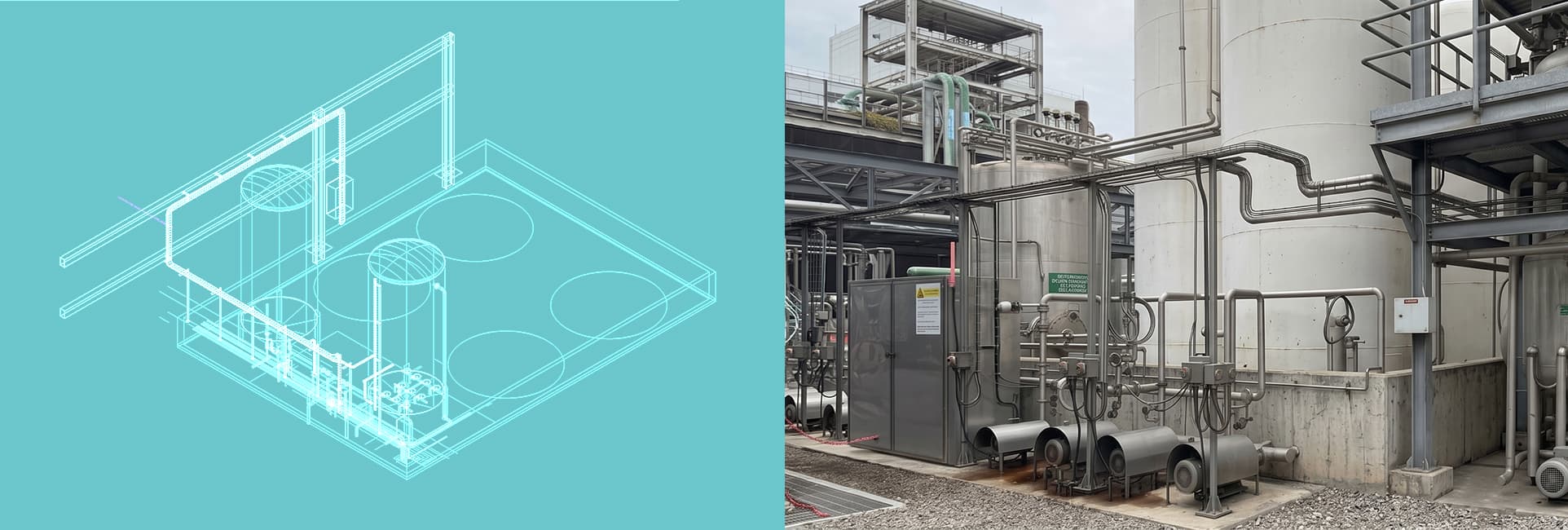
Optimization of CIP caustic water treatment
Optimization of the caustic water neutralization system reduced CO₂ consumption by 40% and process times by 70%.

Client
Confidential

Sector
Food & Beverage

Service
Turnkey Solution

Duration
6 months
Reliance on manual intervention was limiting system performance.
The CIP (Clean-In-Place) system maintains the internal hygiene of process equipment through cleaning cycles using caustic solutions, its highly alkaline effluents require a reliable neutralization process before final disposal to ensure regulatory compliance and operational continuity.
A food and beverage plant needed to optimize its neutralization system, the operation, based on CO₂ injection, relied on manual intervention and basic reactive controls, creating environmental challenges and risks to safety, continuity, and operational efficiency.

Operational efficiency
Environmental compliance
Asset continuity
Operational safety
An integrated strategy based on three pillars
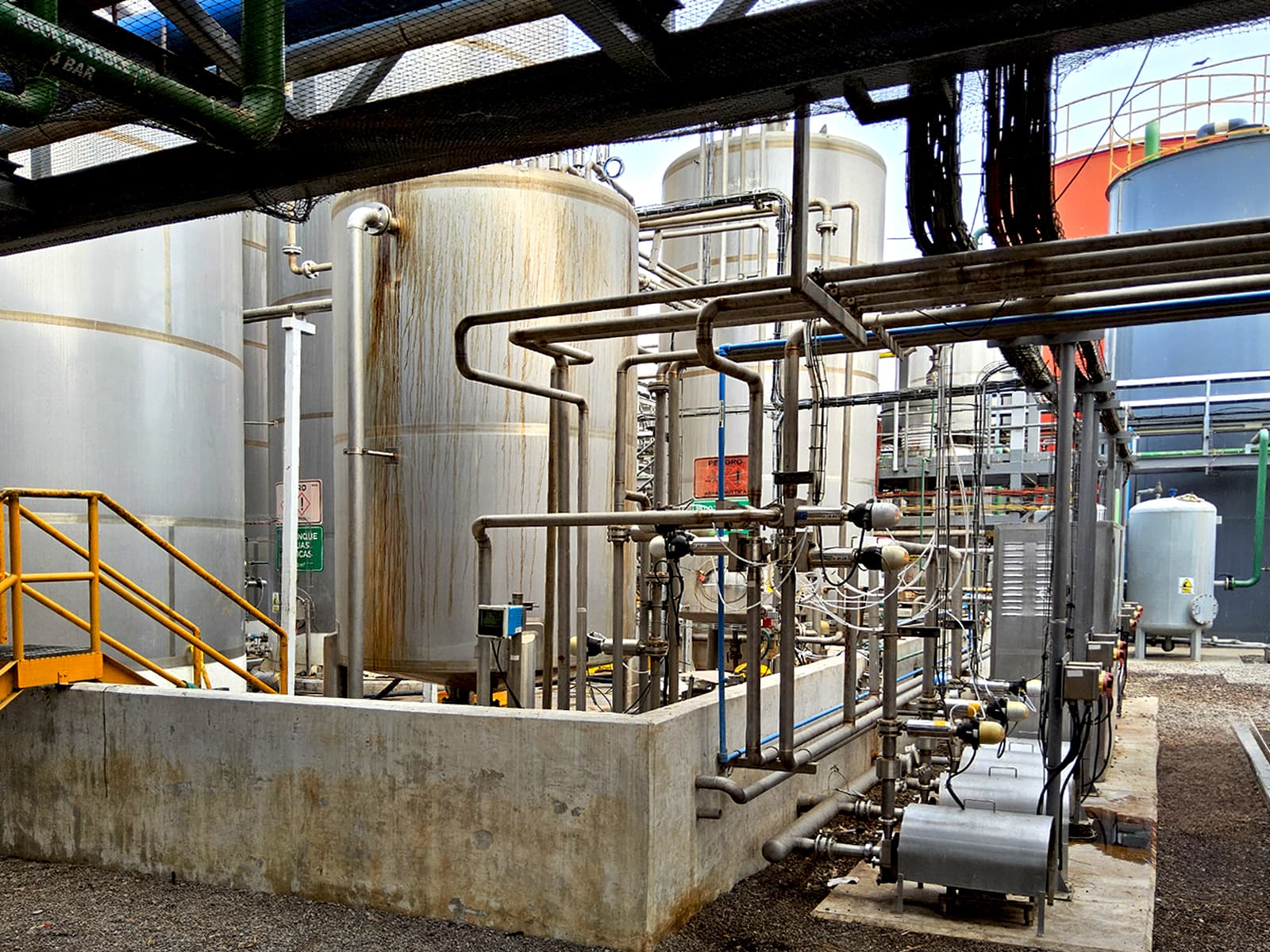
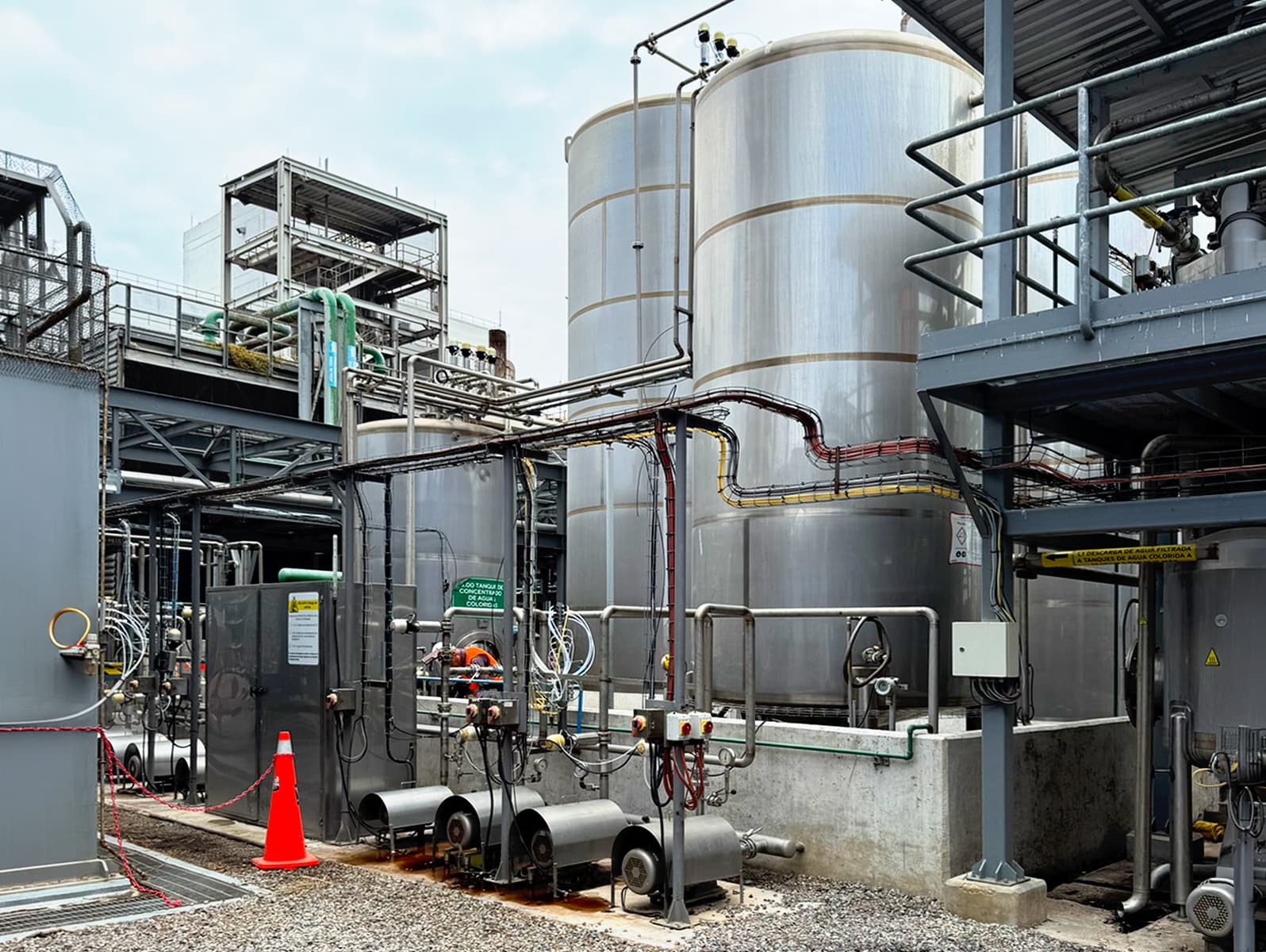
Optimized CO₂ Reaction The injection system was redesigned using a distributor with 11 diffusers and a mass transfer strategy that improves contact between the CO₂ and the effluent, ensuring that each gas dose is used more efficiently, reducing consumption and accelerating neutralization,
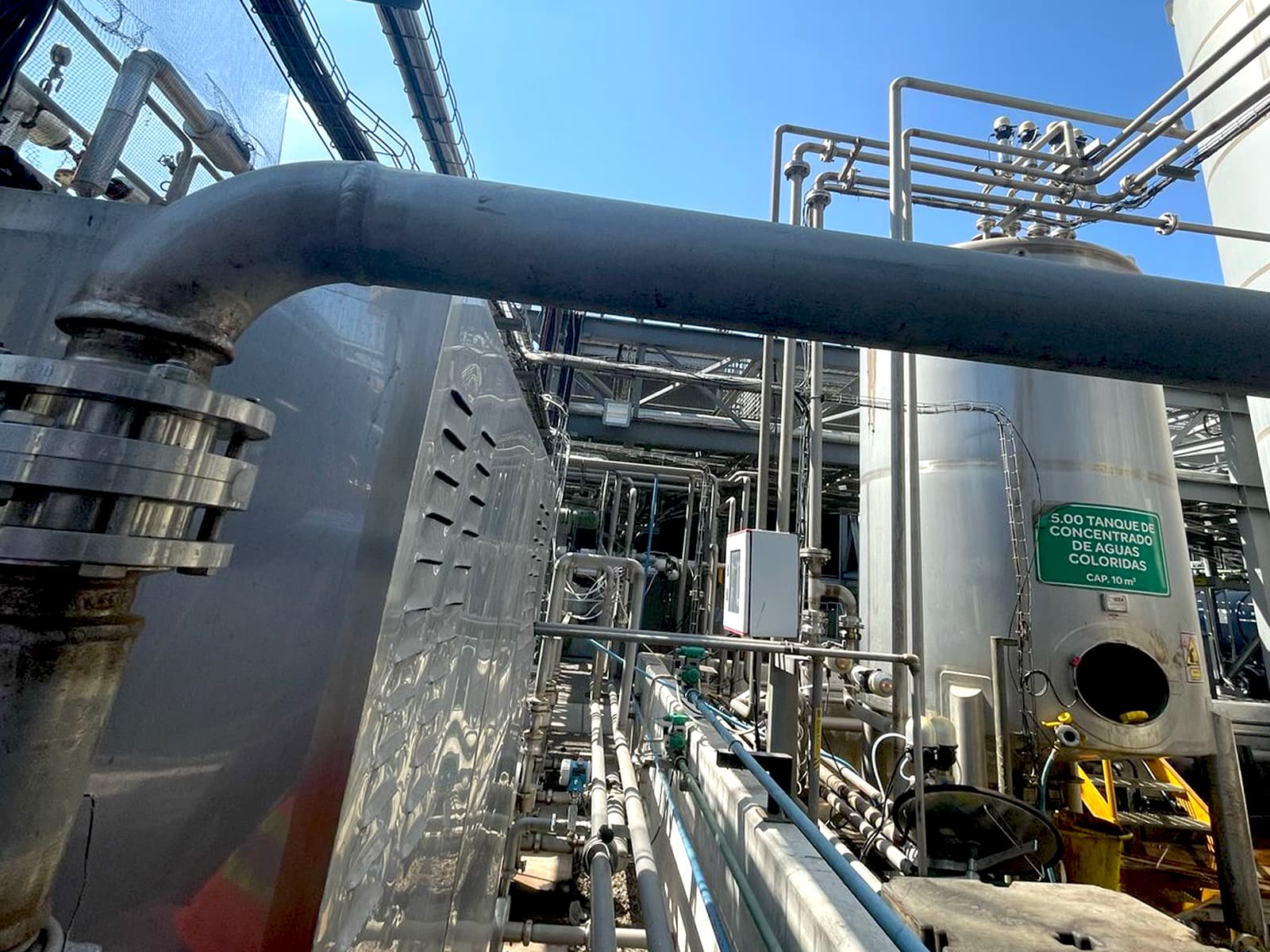
Continuous Real-Time Measurement High-precision instrumentation was incorporated, including inline pH transmitters to continuously monitor the process status, measurement was no longer dependent on the operator and instead became the variable that controls the neutralization process,
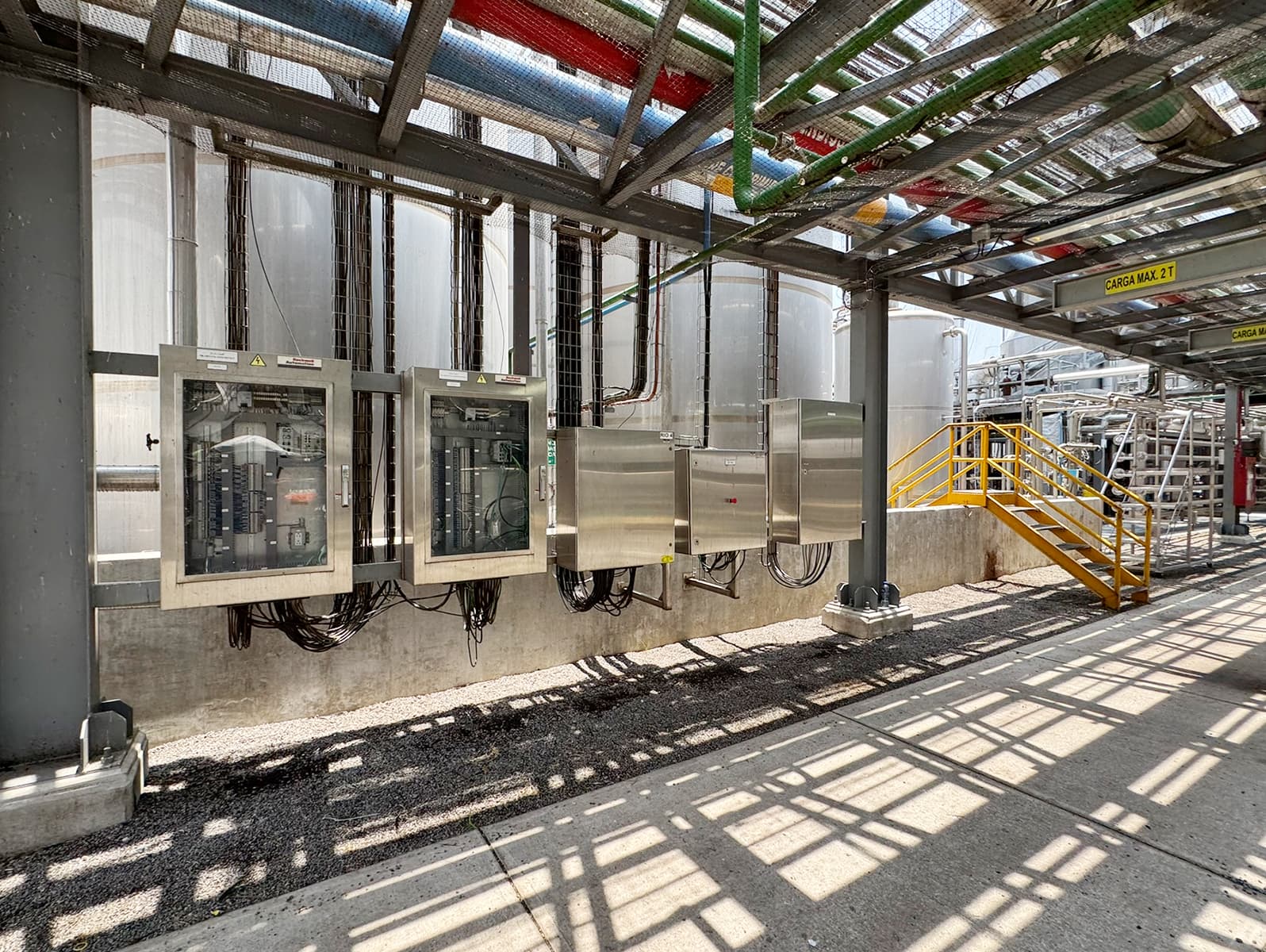
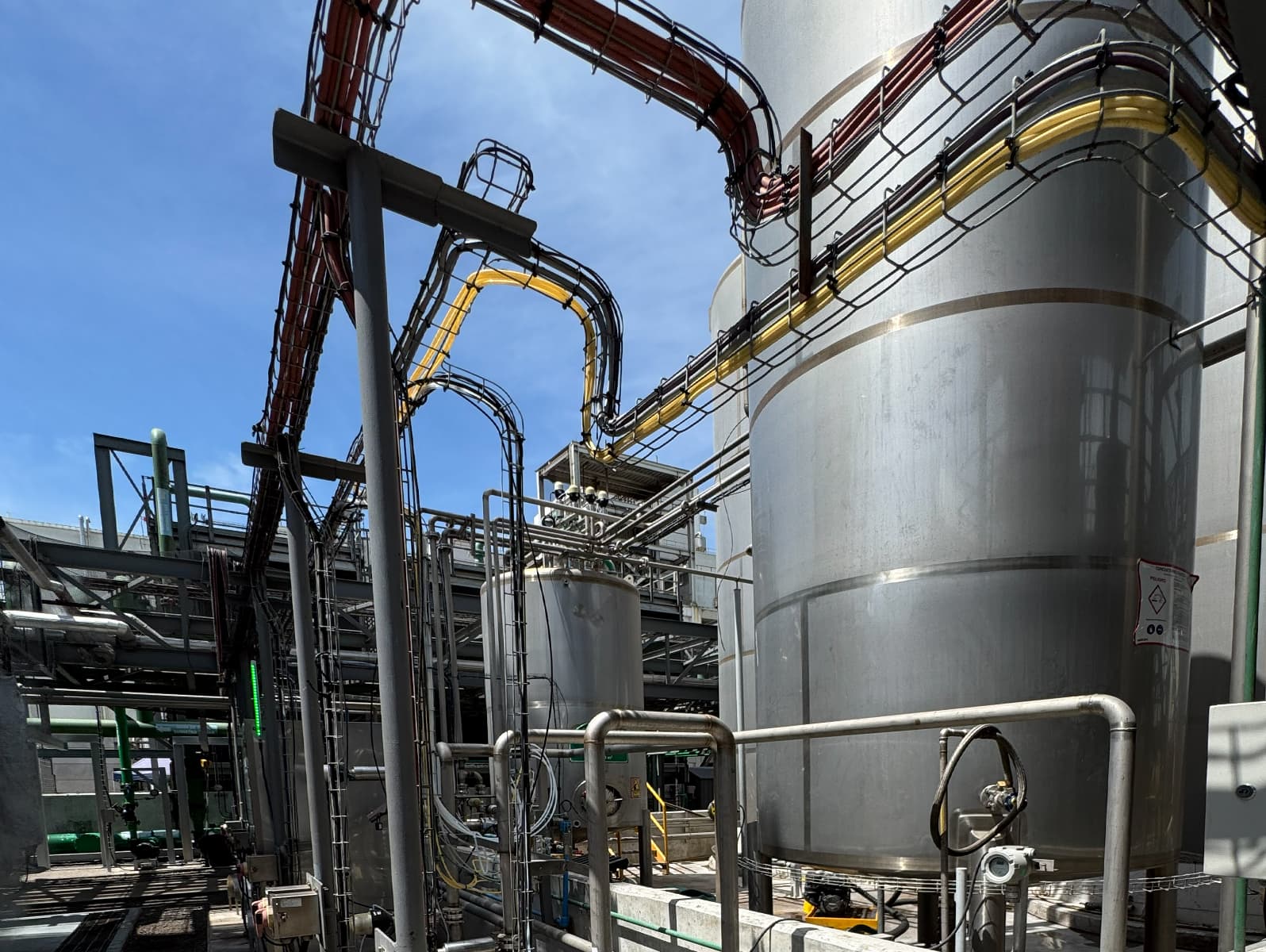
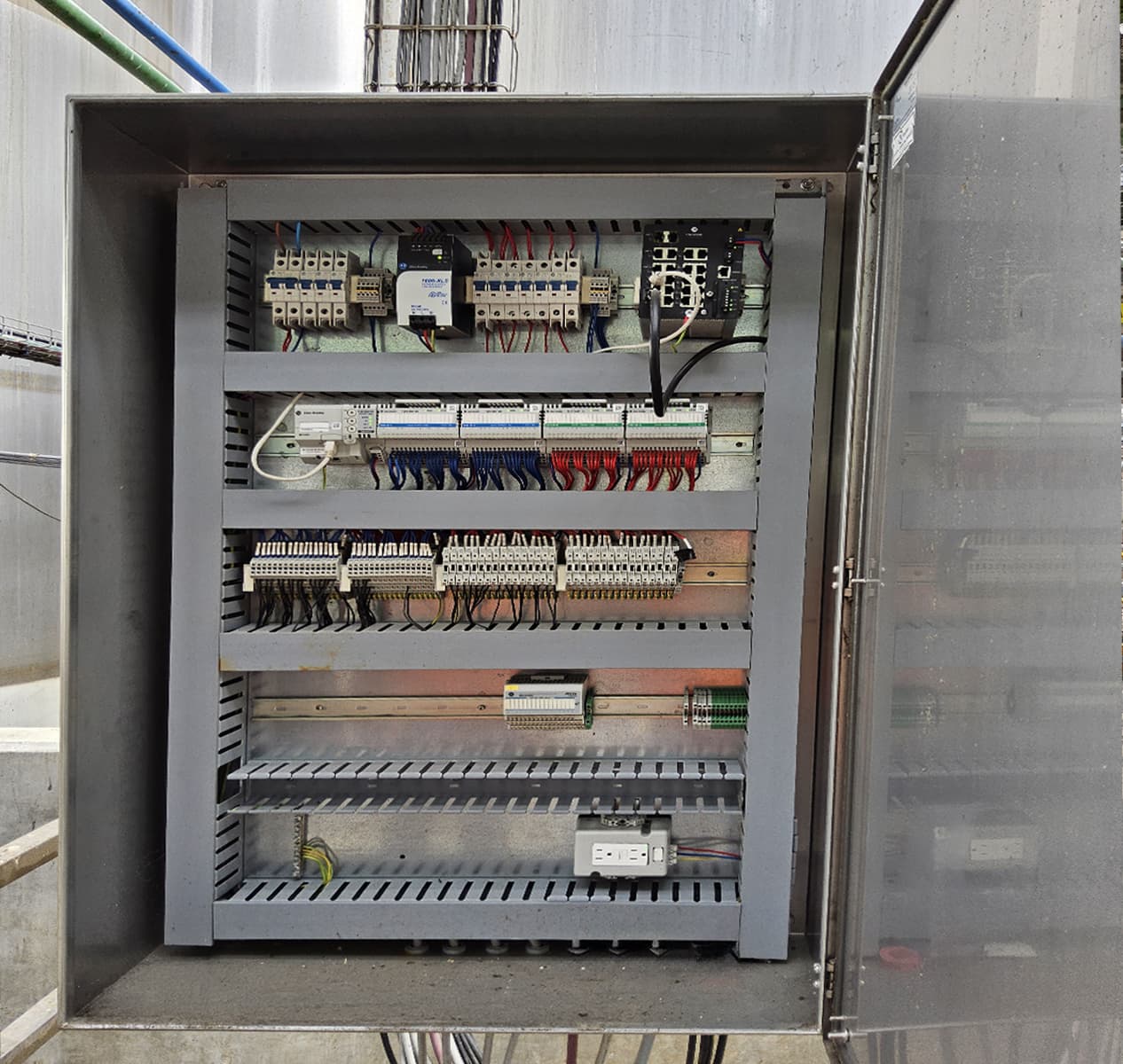
SCADA Automation and Integration The entire operating logic was integrated into a PLC/HMI system connected to SCADA, the system automatically executes the filling, neutralization, and draining sequences, controls valves and flow paths, monitors levels, and enables real-time process visualization from a single platform,
| Risk | Implementation | Function |
|---|---|---|
| Operational efficiency | Closed-Loop Automation System | Automatic adjustment of CO₂ dosing based on process conditions |
| Optimization of CO₂ diffusers and gas-liquid contact times | Improved mass transfer to ensure that every CO₂ molecule fulfills its function | |
| Integration of high-precision sensors with a SCADA interface | Remote monitoring and real-time process visibility | |
| Environmental compliance | Inline pH transmitter | Validation of water conditions during neutralization |
| Distributor with 11 CO₂ diffusers | Improved gas-liquid interaction to stabilize the neutralization process | |
| Automated valves and defined flow paths | Automated flow control within the system | |
| Operational safety | PLC/HMI-based automation | Reduction of manual operations during the process |
| High and low-level sensors | Operational protection of the system and level control | |
| Automation of operating sequences | Controlled execution of filling, neutralization, and draining | |
| Asset continuity | New piping branch and flow configuration | Controlled configuration of operating routes |
| Design and installation of structural supports | Improved mechanical integrity of process lines | |
| Integration with SCADA and remote I/O (RIO) panel | Centralization and visualization of system operation |
A solution that integrated new technologies into the existing operation.
We developed a comprehensive solution covering detailed engineering, field execution, and commissioning, integrating the new technology into the existing operation without compromising process continuity.
1. Detailed Engineering • Development of process diagrams (P&IDs), layouts, and isometric drawings. • Development of the closed-loop control strategy for CO₂ neutralization. • Definition of technical specifications and I/O List for instrumentation and control integration.
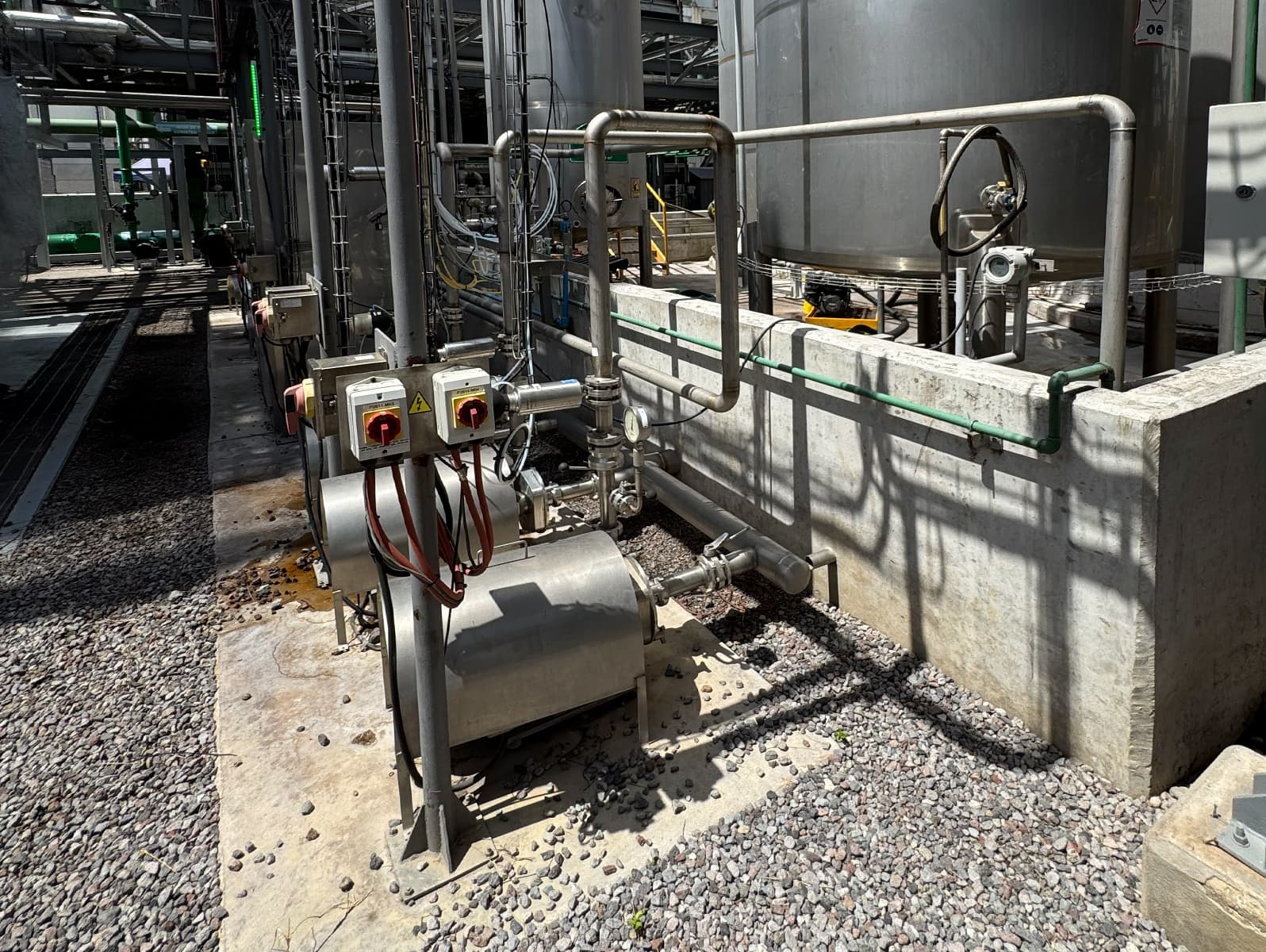
2. Field Execution • Installation of CO₂ diffusers. • Installation of instrumentation and control valves. • Electrical integration and connection to the existing control system. • Development and implementation of the control logic.
3. Commissioning • System commissioning under real operating conditions. • Validation of automated sequences and system response.
40% less
CO₂ consumption
70% less
neutralization time (from 120 minutes to 36 minutes)
| Metric | Before | After | Improvement |
|---|---|---|---|
| CO₂ consumption | Baseline | 60% of previous consumption | -40% |
| Neutralization time | 120 min / cycle | 36 min / cycle | -70% |
| Environmental compliance | Variable, depending on the operator | Traceable and consistent | Controlled risk |
| Operation | Manual with hoses | SCADA-based automation | No human contact with the effluent |
Operational efficiency
Environmental compliance
Asset continuity
Operational safety

We didn't just optimize a chemical process, we restored agility to the production chain, demonstrating that precision engineering is the best tool for savings.
José Chávez, Engineering Projects Specialist Client - Food and Beverage Industry
Five decisions that set this project apart
Results-driven engineering
Total integration
Advanced control strategies
Risk reduction
Operational continuity
Nota de confidencialidad: La información técnica presentada corresponde a un proyecto real. La identidad del cliente se mantiene confidencial de acuerdo con los compromisos contractuales
Is your plant facing a similar challenge?
Turn your process risks into opportunities for improvement through an engineering-designed solution, validated in operation.